Earth Observation has become one of the most effective ways to understand environmental change, infrastructure development and the pressures shaping life across the African continent. Satellite data now informs decisions about agriculture, water management, urban growth and climate resilience. Yet despite its growing relevance, Earth Observation remains distant from many learners, often obscured by technical language and tools that feel inaccessible.
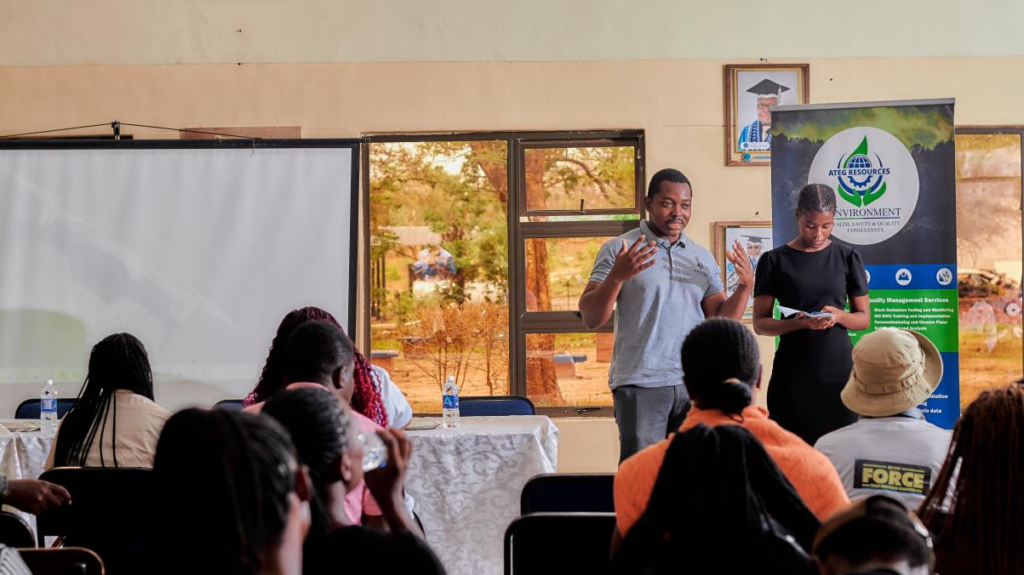
Founded by Muongeni Tamara Manda, a keynote speaker at eLearning Africa 2024, and Wallace Tapiwa Gara, EduNova Solutions has developed an approach to teaching Earth Observation that starts not with software or formulas, but with images and lived experience. Their work is built around three core principles: visual learning, community relevance and purpose-driven application. In many conventional learning environments, satellite images are introduced as complex datasets to be decoded. For newcomers, especially those without a technical background, this can be a barrier rather than an invitation. EduNova’s work reverses this logic by using visuals that are immediately recognisable: before-and-after images of floods or deforestation, time-lapse sequences that show cities expanding, or simplified illustrations that link abstract pixels to real landscapes. When learners can see change unfold, Earth Observation stops being an abstract science and becomes a way of reading the world around them.
Equally important is the decision to anchor learning in everyday realities. Rather than presenting hypothetical case studies, participants are encouraged to identify issues that matter in their own communities. Satellite data is then used to explore questions of water access, soil conditions, transport routes or public services. This shift from distant examples to local concerns changes how learners relate to the technology. Earth Observation becomes a practical tool for understanding familiar challenges, not a subject detached from daily life.
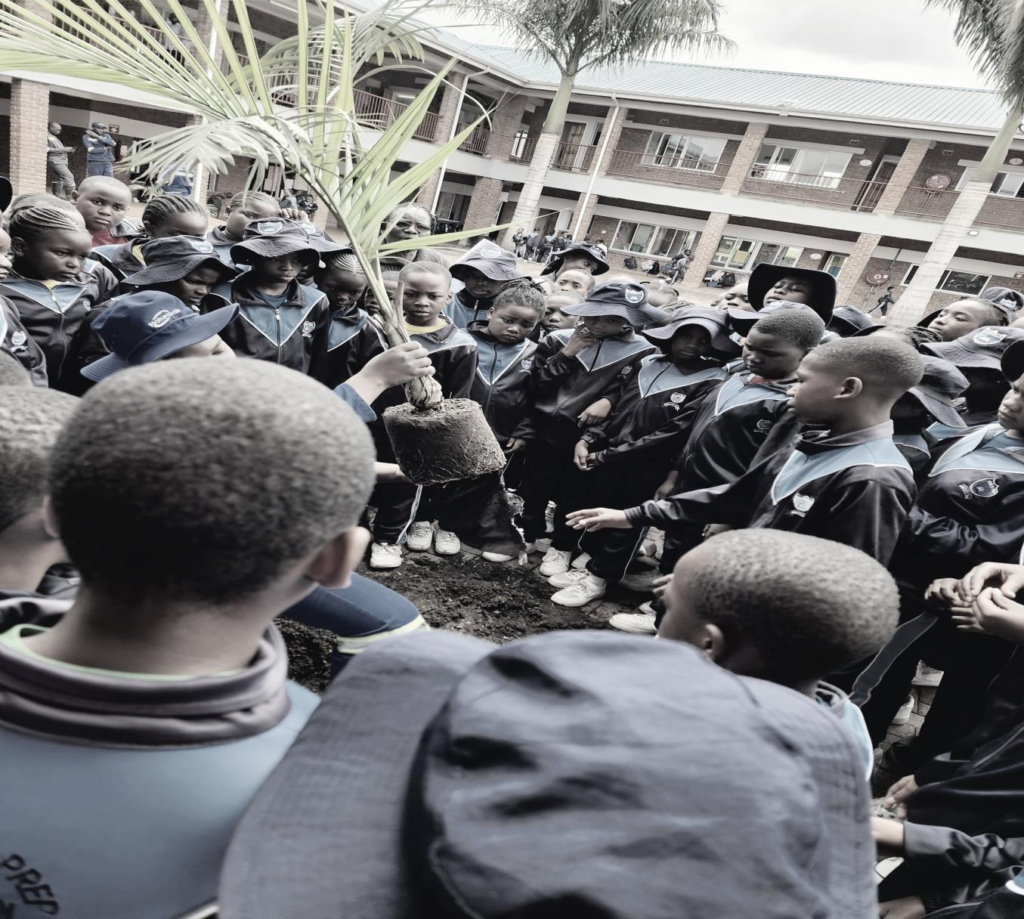
Purpose also plays a defining role. Across much of Africa, communities are grappling with climate risks, food insecurity and infrastructure gaps. Teaching Earth Observation in this context carries a clear responsibility: skills must be connected to action. Programmes are also designed to open pathways into careers in environmental science, urban planning and engineering, linking classroom learning to emerging workforce needs. Lessons are therefore framed around outcomes, whether that is producing a map or contributing to a local report. The emphasis is less on mastering tools for their own sake, and more on understanding how data can inform decisions and support communities.
Experience from classrooms and workshops shows that visual understanding and real-world problems engage learners more effectively, while context-free tools and disconnected curricula tend to alienate rather than empower. Collaboration and mentorship matter, as does allowing space for creativity rather than insisting on technical perfection from the outset. When learning environments encourage experimentation and shared problem-solving, learners are more likely to persist, adapt and apply new skills with confidence.
These insights highlight a broader challenge for educators, policymakers and partners: to align teaching models more closely with community needs and system priorities. If Earth Observation is to fulfil its promise, learning approaches must start with the questions communities are asking, not simply with the technologies available. This requires closer cooperation between education providers, government institutions and industry, as well as delivery models that are practical enough to work in real classrooms. Learners who apply their skills to real-world challenges also need sustained recognition and support.
Earth Observation is often described as data from space, but its significance lies much closer to home. It offers a way to understand land, water and cities – and to act on that understanding. Teaching it through methods that connect with everyday experience does more than build technical capacity. It helps prepare a generation to use knowledge responsibly and to shape solutions that respond to the realities of the places where they live.