From an agricultural tool that identifies crop diseases without an internet connection to a multilingual health assistant, a Nigerian-led initiative is exploring how artificial intelligence can address practical challenges across Africa. At AI4Africa, the emphasis is on developing technology that works under local conditions and giving more Africans the skills to build it.
What if a farmer could identify a crop disease simply by photographing a leaf, without needing an internet connection?
That is the idea behind MobileCrop, an AI-powered Android application developed by Nigerian AI engineer Faruq Afolabi Oluwatobi and contributors from AI4Africa, a community dedicated to making artificial intelligence development more accessible across the continent.
Designed for smallholder farmers, MobileCrop uses a machine-learning model of just 2.74 megabytes, small enough to run on inexpensive smartphones without an internet connection. According to Afolabi, the application has been piloted with 150 farmers through the International Institute of Tropical Agriculture (IITA), primarily around Ibadan in Nigeria, with additional testing in Sokoto, Kaduna, Ghana and Cameroon.
The project reflects a central principle behind AI4Africa: technological innovation must respond to the circumstances in which people actually live and work.
Building AI for African realities
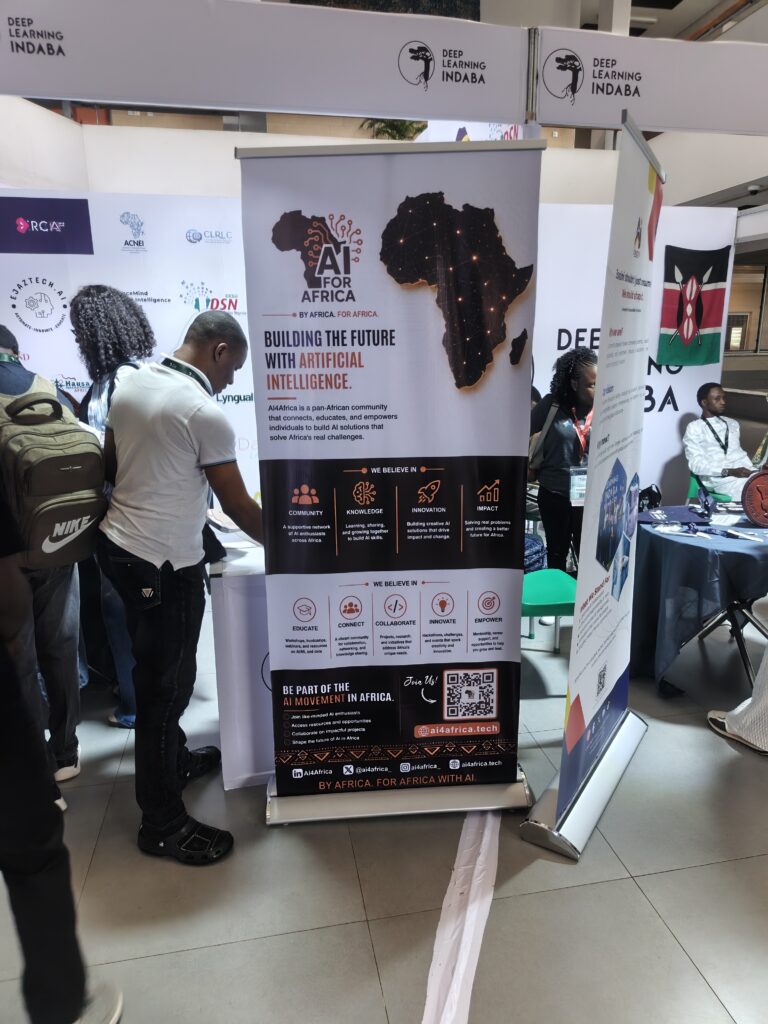
Founded by Afolabi, AI4Africa has grown into a community of more than 800 members across ten African countries. Its approach combines peer learning with the development of practical applications addressing challenges in agriculture, healthcare and other areas.
Rather than concentrating exclusively on theoretical instruction, members learn through collaborative projects, workshops and opportunities to share their expertise.
A member-led initiative called The Weekly Pitch, for example, allows participants to choose an AI-related subject and teach it to others in the community.
The emphasis is on helping learners become developers of technology rather than simply consumers of systems created elsewhere.
Afolabi and his collaborators have been developing several applications that illustrate this approach.
Alongside MobileCrop, the team has created TinyMed-NG, also known as RuralCare AI, an offline medical information assistant designed for areas with limited connectivity.
Based on the Llama 3.2 3B language model, TinyMed-NG has been adapted to work with four Nigerian languages and compressed to approximately 1.36 gigabytes, allowing it to operate directly on an Android phone.
The application remains a working prototype. Its development has nevertheless attracted attention, with the project selected for the Best-of Oral Abstracts session at the AI in Health Summit 2026 and a poster accepted at IndabaX Nigeria 2026.
Its ambition is particularly relevant in communities where internet access is unreliable and health information may not be readily available in familiar languages. As with any AI application providing medical information, rigorous evaluation of accuracy and safety will be essential before wider use.
A third project, HepAI, focuses on emergency response. The application is designed to help users report incidents and identify nearby emergency responders through integrated mapping. A working version has been developed, and Afolabi says the team is discussing a possible pilot with the Lagos State Emergency Management Agency (LASEMA).
Together, the projects demonstrate the range of problems that local AI developers are seeking to address, while showing that different applications require different levels of testing before they can be deployed more widely.
Learning through collaboration
An important aspect of AI4Africa’s work is the role played by community members in developing the applications.
For TinyMed-NG, Olubayode Joy Oluwafunmilayo led the collection of medical data in the Nigerian languages targeted by the project, helping address the lack of suitable existing datasets.
Medical student Imran Hameedat contributed to the application’s medical requirements, while Gemini Addo supported the technical development and coding.
Other members have participated in fieldwork and testing, gathering feedback from users and identifying practical difficulties encountered outside the development environment.
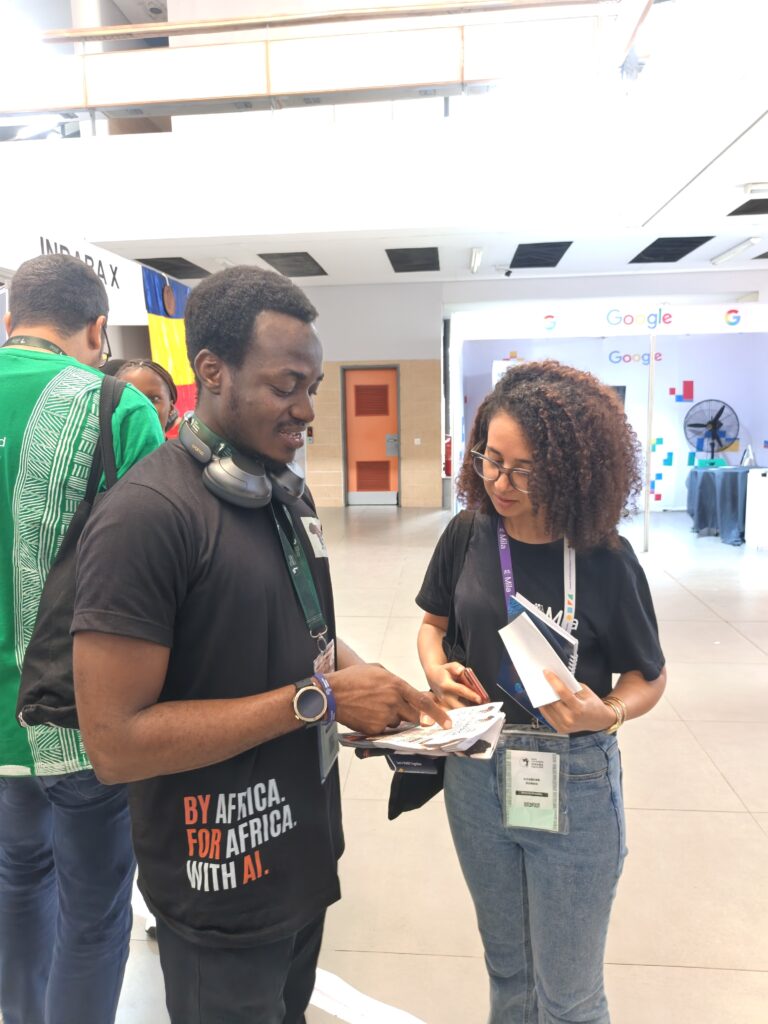
This collaborative approach gives participants experience of the full development process, from identifying a problem and collecting relevant data to building an application and testing how it performs.
It also demonstrates that AI development requires expertise beyond programming. Language knowledge, subject-specific understanding and familiarity with the circumstances of intended users all influence whether a system is useful.
Why offline technology matters
One of the most distinctive features of AI4Africa’s projects is their emphasis on applications that do not depend on continuous internet access.
Many sophisticated AI systems require cloud-based processing and reliable connectivity, potentially limiting their usefulness in communities where mobile data is expensive or networks are unreliable.
By developing compact models that can run directly on ordinary smartphones, AI4Africa is exploring ways to make these technologies more accessible.
The approach involves technical compromises. Smaller models may have more limited capabilities than large cloud-based systems, making careful testing especially important. Nevertheless, designing around available infrastructure can make the difference between an application that is theoretically impressive and one that people can actually use.
For Afolabi, this is one of the central lessons of the community’s experience.
“The biggest lesson for us is that people learn fastest when the problem belongs to them,” he explains.
He points to farmers photographing diseased crops and people seeking health information in their own languages as examples of how practical problems can provide the motivation for learning and development.
The community also places considerable importance on regular collaboration, with members teaching one another and working together to complete projects.
From acquiring skills to creating technology
AI4Africa’s work reflects a broader question facing African education and skills development: how can more learners gain the capabilities to develop technologies that respond to their own communities’ needs?
Formal education and specialist research remain essential to the development of advanced AI. However, initiatives that give learners opportunities to participate in real projects can provide an additional route into technological work.
AI4Africa’s selection for the AGE Applied Intelligence Programme, which focuses on applied AI training and trainer development, offers a further opportunity to develop its educational approach.
The initiative also illustrates the distinction between learning how to use artificial intelligence and acquiring the capabilities to create it.
That distinction is particularly relevant to the theme of eLearning Africa 2027, Africa’s Knowledge Power: From Human Capital to Shared Prosperity.
As African countries consider how to develop their technological capabilities, the challenge extends beyond expanding access to digital tools. It also involves enabling more people to participate in designing and building them.
For AI4Africa, the starting point is often a familiar problem: a farmer dealing with a diseased crop, a community seeking accessible health information or an emergency requiring a rapid response.
The larger ambition is to equip people with the knowledge and practical experience to develop solutions themselves.
Further information: AI4Africa
Photographs: AI4Africa