A new generation of Ghanaian studentpreneurs is turning the spirit of independence into a movement for technological and economic self-determination.
On the morning of March 6, 1957, Kwame Nkrumah stood before a crowd in Accra and declared that the black man was capable of managing his own affairs. The crowd erupted. A continent took note. Ghana had become the first sub-Saharan African nation to throw off the yoke of colonial rule and in doing so lit a flame that would inspire liberation movements from Lagos to Lusaka.
Sixty-nine years later, on that same date, more than a thousand young Ghanaians will gather at the Ghana Digital Centres in Accra. They will not be carrying placards. They will be carrying prototypes.
The StudentPreneur Innovation Festival 2026, hosted by Studentpreneur Africa Network, arrives on Ghana’s Independence Day by design, and the choice is anything but coincidental. This year’s theme, Freedom to Create: Emerging Technologies and the Rise of the African StudentPreneur, frames youth innovation not as an extracurricular pursuit but as the next chapter in a long and unfinished story of African self-determination.
Five Editions and a Movement
What began as a pioneering gathering of young innovators has grown, over five editions, into Ghana’s premier platform for student-led entrepreneurship and invention. Each year, the festival has expanded its reach and its ambition. This fifth edition is the largest yet: over 1,000 students from more than 50 educational institutions, drawn from seven regions across the country, representing both secondary schools and universities in roughly equal measure. The numbers tell part of the story. The idea behind them tells the rest.
“The freedom won 69 years ago must now be expressed through innovation, technology, and entrepreneurship,” says the organising team at Studentpreneur Africa Network. The festival’s premise is that economic independence, technological sovereignty, and the freedom to solve Africa’s challenges with African solutions are not aspirations for some distant future; they are tasks for this generation, and they begin in the classroom, the lab, and the maker space.
A Day Built for Builders
For those attending on March 6, the festival is structured less like a conference and more like an immersive experience, a single, intensive day designed to move participants from inspiration to action.
The morning opens with a high-level panel featuring distinguished guests including the Minister for Youth Development and Empowerment, the CEO of Accra Digital Centre, Ohemaa Osisiadan-Bekoe, the Director of Corporate Affairs at the Kofi Annan ICT Centre of Excellence, and other distinguished guests in the ecosystem. The panel is titled Collaborative Efforts to Support Student Innovation While Strengthening Academic Focus, a conversation that speaks directly to one of the most persistent tensions facing young innovators across the continent: how to build a startup without dismantling your studies.
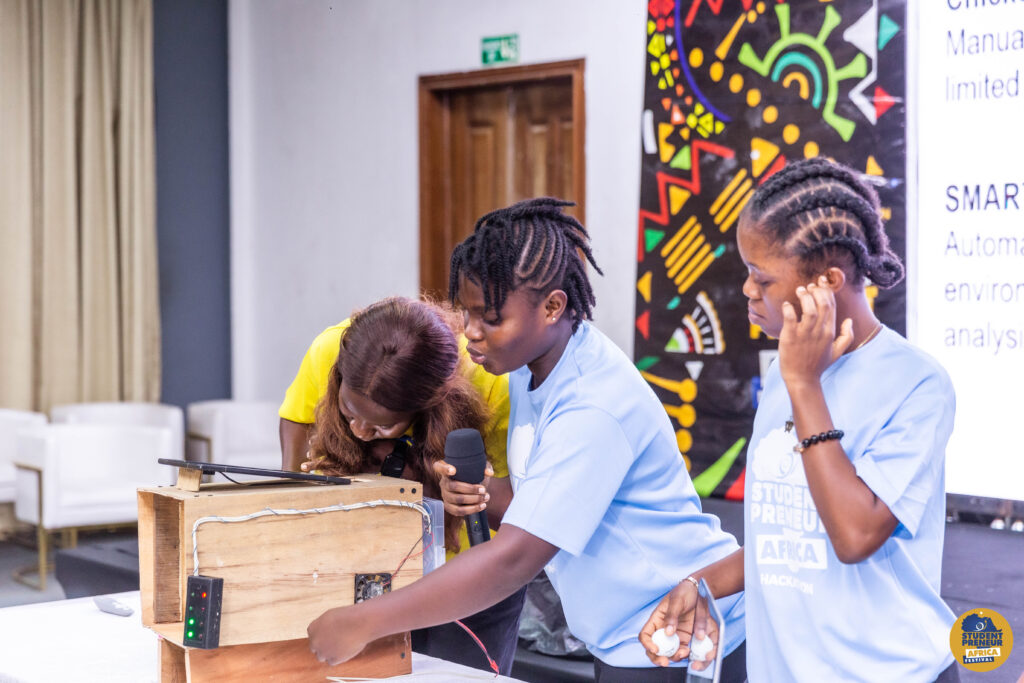
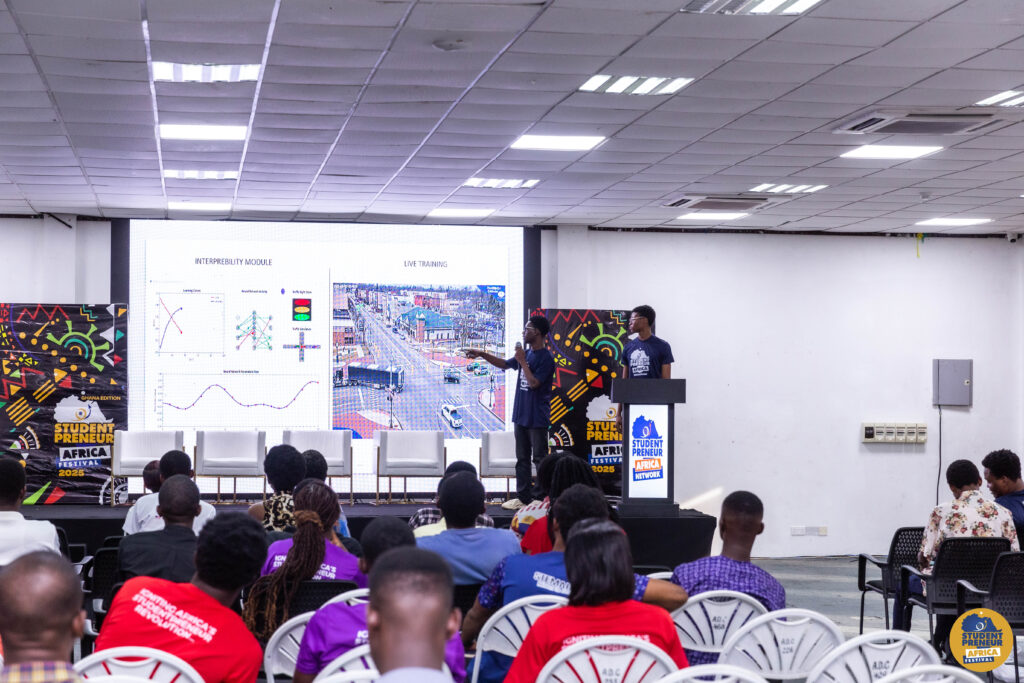
From there, participants fan out into practical skills workshops that are refreshingly hands-on. Students rotate through sessions covering robotics fundamentals, electronics and the Internet of Things, mobile app development, digital tools for design and collaboration, engineering thinking, and live demonstrations of emerging technologies including artificial intelligence, blockchain, augmented and virtual reality. These are not passive sit-and-listen sessions. They are designed to put tools in students’ hands and problems in front of their minds.
Then there are the competitions. A Robotics Challenge. An AI Development Challenge. A Tech Speed Challenge. Each one tests not just technical knowledge but creative problem-solving, the ability to look at a challenge and ask: what would I build?
The All-Female Hackathon: Building a Different Kind of Future
One of the most significant features of this year’s festival is the All-Female Hackathon, hosted in partnership with Oracle Academy. In a region where young women remain underrepresented in technology and entrepreneurship, the hackathon is both a practical intervention and a statement of intent.
Bridging gender gaps is listed explicitly among the festival’s core objectives, creating dedicated pathways for young women in technology and innovation. The hackathon is where that objective becomes tangible. For the young women who will spend hours on March 6 debugging code, pitching solutions, and pushing each other toward the finish line, it is also something simpler: proof that this space belongs to them too.
Voices from the Journey
Perhaps the most anticipated moment of the day is the Fireside Chat, scheduled for late afternoon. Four exceptional studentpreneurs, young people who have navigated the complicated terrain of building something while studying for something, will share their stories with an audience of peers.
The topics they will address are the ones that matter most to any young person trying to build in Africa today: overcoming failure, staying grounded when momentum stalls, managing the balance between academic responsibility and entrepreneurial drive, and ultimately, what kind of future they are working toward.
These stories matter because they are not stories of overnight success or frictionless achievement. They are stories of persistence in contexts where resources are scarce, infrastructure is unreliable, and the path from idea to impact is rarely straight. For the secondary school student in the audience who has an idea but doesn’t yet know what to do with it, hearing someone only a few years older describe that same uncertainty and what they did next can be the most important lesson of the day.
Innovation as Inheritance
The festival closes with an Awards and Recognition Ceremony, celebrating outstanding young innovators across multiple categories. There are prizes, yes, but the ceremony carries a weight beyond the material. It is an act of naming: this is what excellence looks like, and it looks like you.
Across the day, the exhibition floor will host more than 15 booths where student innovators demonstrate their work live: products, platforms, and prototypes built to address real challenges in Ghanaian and African contexts. Mobile applications designed for local markets. Engineering solutions conceived in classrooms. Ideas that started as school projects and grew into something more.
The festival’s ambition extends beyond Ghana’s borders. Pan-African collaboration is a stated goal, and the connections forged at events like this between students from different institutions, regions, and disciplines are the quiet infrastructure of a continent-wide innovation ecosystem that is still being built.
The Longer Arc
There is a reason the Studentpreneur Innovation Festival is held on Independence Day, and it is worth sitting with for a moment. The generation that fought for Ghana’s political independence did so because they believed the continent’s future belonged to its own people. They were right. The generation gathering at the Ghana Digital Centres on March 6, 2026, carries a different but related conviction: that Africa’s technological and economic future also belongs to its own people and that building it is not someone else’s job.
The festival will last one day. The ideas it plants, the connections it forges, and the confidence it builds in a thousand young people who leave having built something, learned something, or heard something that shifted their sense of what is possible – those will last considerably longer.
Sixty-nine years after independence, the freedom to create is the next frontier. And in Ghana, at least, the next generation is already at work.
The StudentPreneur Innovation Festival 2026 takes place on 6th March 2026 at the Ghana Digital Centres, Accra. The event is hosted by Studentpreneur Africa Network.
By Claudia Twum